Daiki Yamane, Ryo Tetsukawa, Naoki Zenmyo, Kaori Tabata, Yuya Yoshida, Naoya Matsunaga, Naoya Shindo, and Akio Ojida
A blog highlighting recent publications in the area of covalent modification of proteins, particularly relating to covalent-modifier drugs. @CovalentMod on Twitter, @covalentmod@mstdn.science on Mastodon, and @covalentmod.bsky.social on BlueSky
Thursday, July 6, 2023
Expanding the Chemistry of Dihaloacetamides as Tunable Electrophiles for Reversible Covalent Targeting of Cysteines
Sunday, June 25, 2023
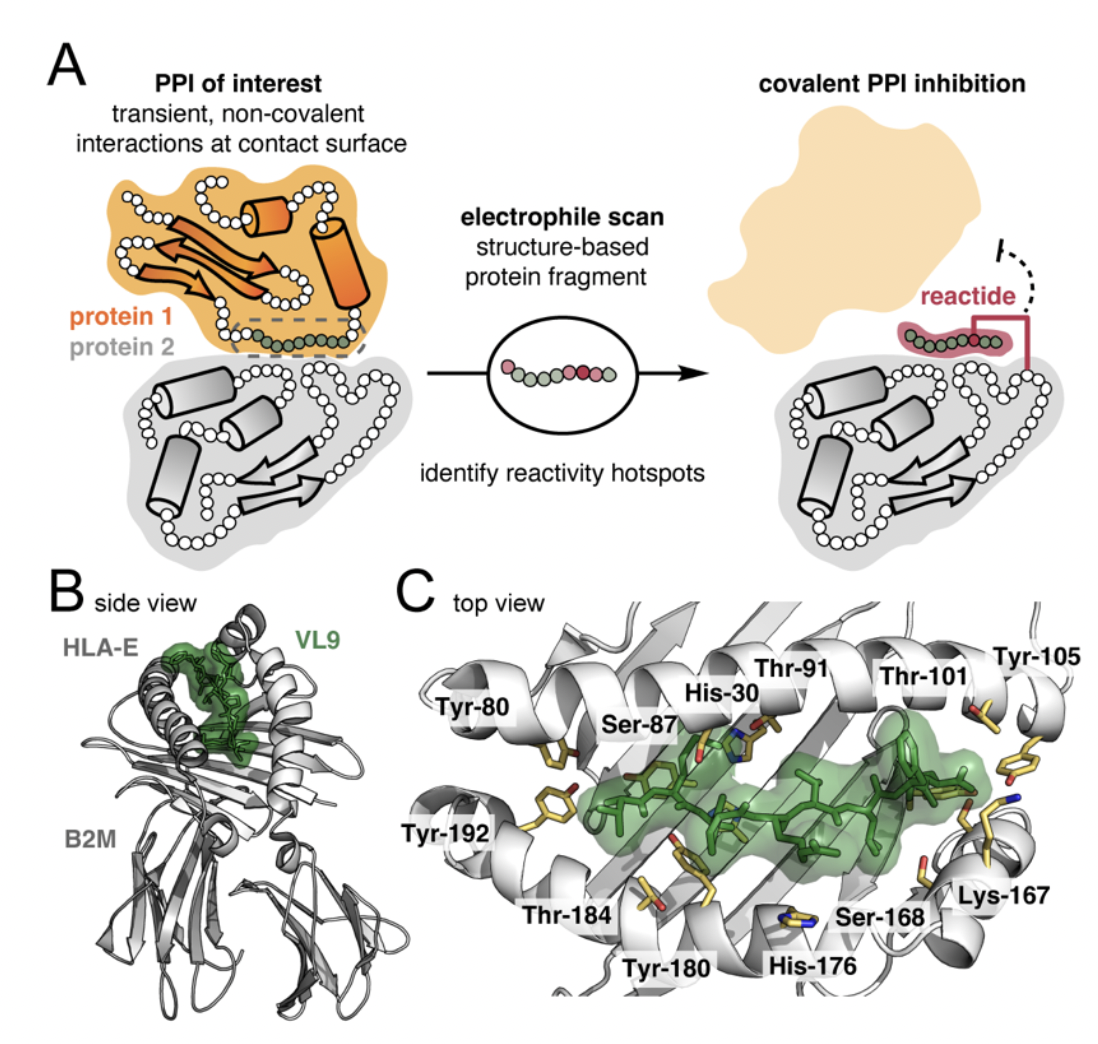
Electrophile Scanning Reveals Reactivity Hotspots for the Design of Covalent Peptide Binders
Grob, N. M.; Remarcik, C.; Rössler, S. L.; Wong, J. Y. K.; Wang, J. C. K.; Tao, J.; Smith, C. L.; Loas, A.; Buchwald, S. L.; Eaton, D. L.; Preciado López, M.; Pentelute, B. L.
ChemRxiv 2023.
https://doi.org/10.26434/chemrxiv-2023-hvq1k
Protein–protein interactions (PPIs) are intriguing targets in drug discovery and development. Peptides are well suited to target PPIs, which typically present with large surface areas lacking distinct features and deep binding pockets. To improve binding interactions to these topologies by PPI-focused therapeutics and advance their development, potential ligands can be equipped with electrophilic groups to enable binding through covalent mechanisms of action. We report a strategy termed electrophile scanning to identify reactivity hotspots in a known peptide ligand. Cysteine mutants of the ligand are used to install protein-reactive modifiers via a palladium oxidative addition complex (Pd-OAC). Reactivity hotspots are revealed by cross-linking reactions with the target protein under physiological conditions. In a system with the 9-mer peptide antigen VL9 and MHC class I receptor HLA-E, we identify two reactivity hotspots that afford up to 87% conversion to the protein–peptide conjugate within 4 hours. The reactions are specific to the target protein in vitro and dependent on the peptide sequence. Moreover, the cross-linked peptide successfully inhibits molecular recognition of HLA-E by CD94─NKG2A possibly due to structural changes enacted at the PPI interface. The results illustrate the potential of electrophile scanning as a tool for rapid discovery and development of covalent peptide binders.
Enhancing the Equilibrium of Dynamic Thia-Michael Reactions through Heterocyclic Design
Alex E. Crolais, Neil D. Dolinski, Nicholas R. Boynton, Julia M. Radhakrishnan, Scott A. Snyder, and Stuart J. Rowan
Journal of the American Chemical Society 2023
DOI: 10.1021/jacs.3c03643
Tuesday, June 6, 2023
Comprehensive Mapping of Electrophilic Small Molecule-Protein Interactions in Human Cells
Cravatt, B.; Njomen, E.; Hayward, R.; DeMeester, K.; Ogasawara, D.; Dix, M.; Nguyen, T.; Ashby, P.; Simon, G.; Schreiber, S.; Melillo, B.
ChemRxiv 2023
https://doi.org/10.26434/chemrxiv-2023-s446n
Covalent chemistry is a versatile approach for expanding the ligandability of the human proteome. Activity-based protein profiling (ABPP) can infer the specific residues modified by electrophilic compounds through competition with broadly reactive probes. Nonetheless, the extent to which such residue-directed ABPP platforms fully assess the protein targets of electrophilic compounds in human cells remains unclear. Here, we introduce a complementary approach that directly identifies proteins showing stereoselective reactivity with focused libraries of stereochemically-defined, alkynylated electrophilic compounds. Integration of protein- and cysteine-directed ABPP data from compound-treated human cancer cells revealed generally well-correlated target maps and highlighted specific features, such as protein size and the proteotypicity of cysteine-containing peptides, that help to explain gaps in each ABPP platform. The integrated ABPP strategy furnished stereoselective, high-engagement covalent ligands for > 300 structurally and functionally diverse human proteins, including compounds that modulate enzymes by canonical (active-site cysteine) and non-canonical (isotype-restricted and non-catalytic cysteines) mechanisms.
Monday, June 5, 2023
Structure-Based Design and Characterization of the Highly Potent and Selective Covalent Inhibitors Targeting the Lysine Methyltransferases G9a/GLP
DOI: 10.1021/acs.jmedchem.3c00411
Protein lysine methyltransferases G9a and GLP, which catalyze mono- and di-methylation of histone H3K9 and nonhistone proteins, play important roles in diverse cellular processes. Overexpression or dysregulation of G9a and GLP has been identified in various types of cancer. Here, we report the discovery of a highly potent and selective covalent inhibitor 27 of G9a/GLP via the structure-based drug design approach following structure–activity relationship exploration and cellular potency optimization. Mass spectrometry assays and washout experiments confirmed its covalent inhibition mechanism. Compound 27 displayed improved potency in inhibiting the proliferation and colony formation of PANC-1 and MDA-MB-231 cell lines and exhibited enhanced potency in reducing the levels of H3K9me2 in cells compared to noncovalent inhibitor 26. In vivo, 27 showed significant antitumor efficacy in the PANC-1 xenograft model with good safety. These results clearly indicate that 27 is a highly potent and selective covalent inhibitor of G9a/GLP.
Characterization of a Potent and Orally Bioavailable Lys-Covalent Inhibitor of Apoptosis Protein (IAP) Antagonist
Thursday, June 1, 2023
Covalent Inhibition by a Natural Product-Inspired Latent Electrophile
David P. Byun, Jennifer Ritchie, Yejin Jung, Ronald Holewinski, Hong-Rae Kim, Ravichandra Tagirasa, Joseph Ivanic, Claire M. Weekley, Michael W. Parker, Thorkell Andresson, and Euna Yoo
Journal of the American Chemical Society 2023 145 (20), 11097-11109
DOI: 10.1021/jacs.3c00598
Strategies to target specific protein cysteines are critical to covalent probe and drug discovery. 3-Bromo-4,5-dihydroisoxazole (BDHI) is a natural product-inspired, synthetically accessible electrophilic moiety that has previously been shown to react with nucleophilic cysteines in the active site of purified enzymes. Here, we define the global cysteine reactivity and selectivity of a set of BDHI-functionalized chemical fragments using competitive chemoproteomic profiling methods. Our study demonstrates that BDHIs capably engage reactive cysteine residues in the human proteome and the selectivity landscape of cysteines liganded by BDHI is distinct from that of haloacetamide electrophiles. Given its tempered reactivity, BDHIs showed restricted, selective engagement with proteins driven by interactions between a tunable binding element and the complementary protein sites. We validate that BDHI forms covalent conjugates with glutathione S-transferase Pi (GSTP1) and peptidyl-prolyl cis–trans isomerase NIMA-interacting 1 (PIN1), emerging anticancer targets. BDHI electrophile was further exploited in Bruton’s tyrosine kinase (BTK) inhibitor design using a single-step late-stage installation of the warhead onto acrylamide-containing compounds. Together, this study expands the spectrum of optimizable chemical tools for covalent ligand discovery and highlights the utility of 3-bromo-4,5-dihydroisoxazole as a cysteine-reactive electrophile.
Discovery of a covalent FGFR2-selective inhibitor overcoming clinically-acquired resistance mutations
Huang, X., Cao, X., Zheng, L. et al. Nat Commun (2026). https://doi.org/10.1038/s41467-026-76339-0 Abnormal activation of fibroblast gro...
-
Design, synthesis and biological evaluation of the activity-based probes for FGFR covalent inhibitorDandan Zhu, Zijian Zheng, Huixin Huang, Xiaojuan Chen, Shuhong Zhang, Zhuchu Chen, Ting Liu, Guangyu Xu, Ying Fu, Yongheng Chen, European Jo...
-
L. Mader and J. W. Keillor, RSC Med. Chem ., 2025 DOI: 10.1039/D5MD00050E Potent reversible covalent inhibitors are often slow in establish...
-
Yoav Shamir, Nir London bioRxiv 2025.03.19.642201 doi: https://doi.org/10.1101/2025.03.19.642201 Recent years have seen an explosion in the...